



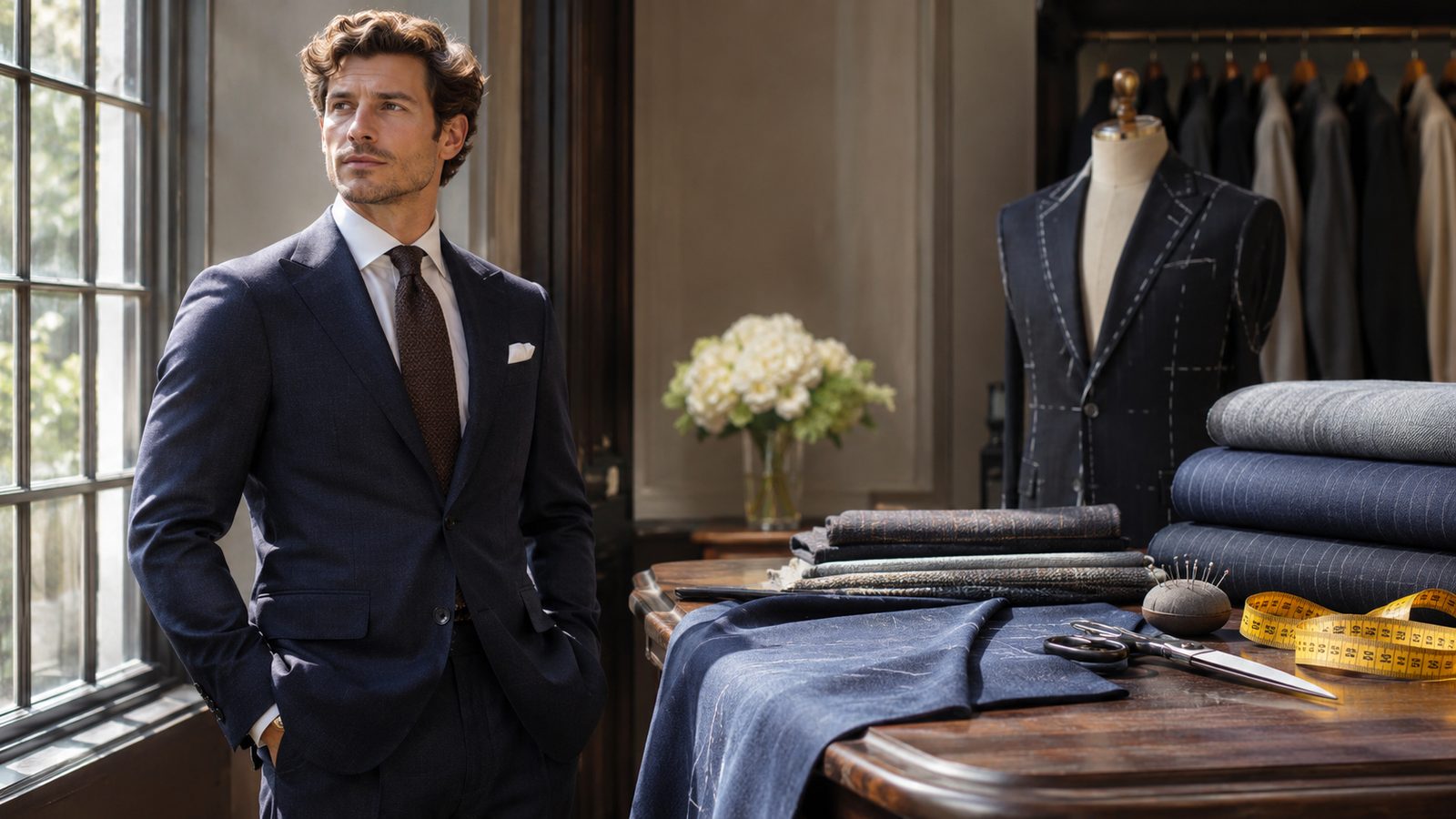
Expensive suits can range from several thousand dollars to well above $10,000 at major luxury houses. Price usually reflects construction, cloth, skilled labor, fit, and brand positioning. A higher price alone does not guarantee a better garment. For American buyers, the useful question is not which label costs the most. It is what the money buys inside the jacket. Understanding those differences makes luxury tailoring easier to judge. Direct answer: Luxury tailoring becomes expensive through full canvassing, premium cloth, skilled handwork, complex fitting, and limited production. Bespoke work can add custom patternmaking and repeated fittings. Designer branding can raise the price further, so buyers should compare construction and fit before focusing on the label.
Expensive Suits at a Glance
| Factor | What Raises the Price | Why It Matters |
|---|---|---|
| Construction | Full canvas, hand-padded lapels, detailed finishing | Improves structure, movement, and long-term shape |
| Fabric | Fine wool, cashmere, silk, vicuña, specialty cloth | Changes drape, softness, weight, rarity, and comfort |
| Labor | More hand sewing and finishing | Requires skilled time that machines cannot replace |
| Fit process | Made-to-measure or bespoke fittings | Allows greater adjustment for individual proportions |
| Fabric source | Established textile mills and rare collections | Adds material quality, provenance, and exclusivity |
| Brand | Luxury positioning, retail service, heritage | May raise pricing beyond construction costs |
| U.S. retail price | Roughly $4,900 to $18,000 among brands reviewed | Current examples vary by material and collection |
Price ranges in this guide are approximate U.S. retail figures checked in November 2026. Collections, availability, taxes, alterations, and special-order fabrics can change the final price.
What Makes Expensive Suits Cost So Much?
The hidden structure of a jacket is one of the largest quality differences. Canvassing sits between the outer cloth and lining. It gives the chest shape and helps the lapel roll naturally. A fused jacket uses adhesive to secure much of that internal structure. Half-canvas construction uses traditional canvas through important upper sections. Full canvas extends the floating structure farther through the jacket. Full canvassing requires more material, precision, and manufacturing time. It can also move more naturally with the wearer. That does not make every full-canvas garment automatically worth its asking price. Fit remains more important than an impressive construction label. An expensive jacket that pulls or collapses around the shoulders still looks wrong. Buyers should judge construction together with balance, proportions, and alterations.
Why Fabric Mills Matter
Luxury tailoring often starts with cloth from established textile specialists. The mill affects fiber selection, spinning, weaving, finishing, weight, and surface character. These details influence how the finished garment hangs and feels. Vitale Barberis Canonico traces documented wool-mill activity to 1663. Its modern ranges include traditional worsteds and high-count fabrics such as Super 180’s cloth. That history does not make every fabric suitable for every buyer. Scabal operates a heritage mill in Yorkshire and maintains thousands of luxury cloth options. Its current collections include Super 180’s and Super 200’s wool. The company also produces specialty fabrics using unusual fibers and precious-metal details. Dormeuil offers cloth ranging from performance-focused worsted wool to rare vicuña collections. Its current catalog includes Super 130’s, Super 200’s, and pure vicuña options. Rare fiber content can increase material costs substantially. A higher “Super” number should not become the only buying criterion. Extremely fine wool may feel luxurious but can require more careful use. Daily business wear often benefits from a practical balance between softness and resilience.
Bespoke vs. Made-to-Measure: Where the Price Difference Goes
Made-to-measure begins with an established house pattern or block. Measurements are used to adjust that existing foundation. Buyers can normally choose cloth and numerous styling details. Huntsman describes its made-to-measure service using this exact approach. Its house block is modified using the client’s measurements. The firm currently lists two-piece MTM tailoring from £3,500. Bespoke begins differently because a personal pattern is created for the individual. The process usually includes several fittings and substantial handwork. Adjustments can affect balance, posture, shoulder treatment, and other structural details. Huntsman says its bespoke garments involve up to 80 hours of handwork. Its process can include three fittings before completion. A two-piece bespoke commission currently starts at £7,500 in London. The distinction matters because “custom” can describe different services in American marketing. Buyers should ask whether the maker alters a standard pattern. They should also ask whether a new individual pattern is drafted.
Luxury Brand Prices in the U.S. as of November 2026
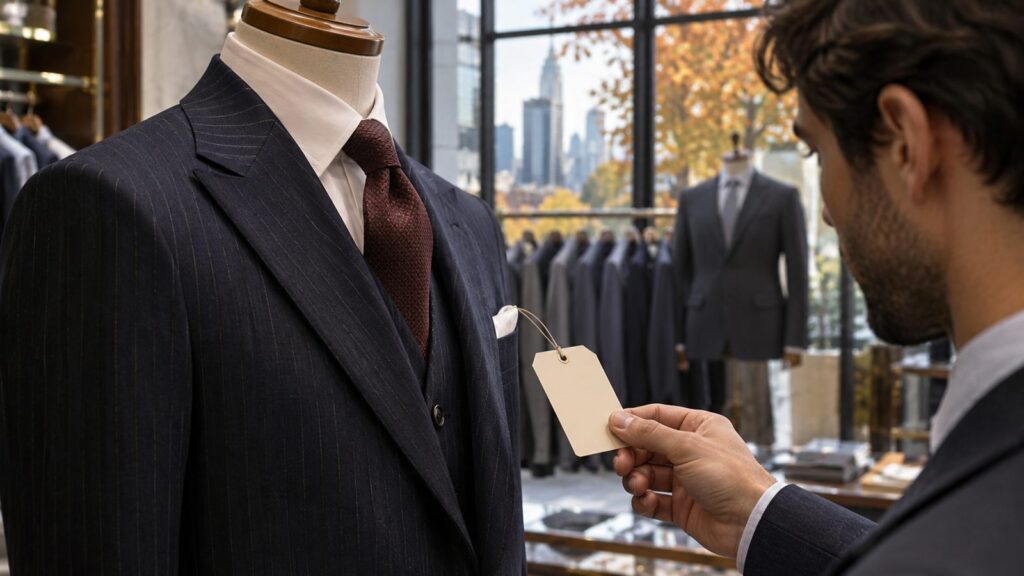
Current official U.S. stores provide a more useful benchmark than old “most expensive” lists. These ranges cover products available or displayed during November 2026. They are approximate snapshots rather than permanent price guarantees.
| Brand | Approximate Current U.S. Range | Examples Seen on Official Store | Positioning |
|---|---|---|---|
| Kiton | $9,000–$18,000 | Wool, cashmere blends, 14-micron wool, vicuña blends | High-end Neapolitan luxury |
| Brioni | $6,500–$15,700 | Super 160’s and Super 210’s wool | Roman luxury tailoring |
| Zegna | $4,900–$10,900 | Trofeo, Centoventimila, Oasi Cashmere | Fabric-focused Italian luxury |
| Tom Ford | $5,000–$7,500 | Wool tailoring and formal evening options | Designer-led luxury tailoring |
Kiton currently shows American retail examples around $9,140 through $17,850. Fabrics include wool, cashmere mixtures, and higher-priced specialty fibers. The live collection therefore supports a five-figure expectation for many current pieces. Brioni’s U.S. formalwear selection currently includes complete garments from about $6,500 upward. Certain Super 210’s wool examples reach roughly $13,300 to $15,700. These figures come from current brand listings rather than historic record-price stories. Zegna shows a broader spread among its current American offerings. Trofeo Selection examples sit around $4,890, while several premium wool lines reach roughly $7,250. Oasi Cashmere examples currently reach about $10,900. Tom Ford currently lists complete options around $4,990 through roughly $7,490. Certain jackets and matching trousers are sold separately at higher combined totals. Buyers should check whether a displayed price covers one piece or a complete set. These ranges should not be interpreted as permanent ceilings. Seasonal cloth, special orders, alterations, and private commissions can cost more. The safest comparison uses current products with clearly stated specifications.
Is a Higher Price Always Better?
Luxury pricing becomes difficult because quality and branding overlap. A buyer may pay for superior cloth and workmanship. The same price can also include designer positioning, retail environments, and limited distribution. Construction therefore deserves more attention than logos. Ask whether the jacket is fused, half-canvassed, or fully canvassed. Then examine the shoulder, collar, sleeve pitch, balance, and trouser fit. Cloth should also match how you plan to wear the garment. An ultra-fine textile may suit occasional formal use beautifully. A harder-wearing worsted can make more sense for frequent business travel. Newsstact readers interested in broader style coverage can browse the site’s Fashion section. Its Mathilde Pinault profile also covers connections between fashion and the luxury industry. Readers exploring statement footwear can also see the Big Yellow Boots guide.
How to Shop for Expensive Suits Without Overpaying
Start with fit before comparing prestige. The collar should remain clean against your neck. The jacket should also close without strong pulling or obvious distortion. Next, ask specific questions about construction. A salesperson should be able to explain the internal structure clearly. Do not assume visible pick stitching proves extensive handwork. Then inspect the fabric information. Look for fiber content, mill or merchant details, weight, and intended season. Famous mill names are useful signals, but suitability still matters more than prestige. Finally, compare the service included with the price. Alterations, fittings, aftercare, and future adjustments can add meaningful value. A lower-priced garment may become the smarter purchase after those factors are considered.
What Is the Best Luxury Tier for Most Buyers?
There is no universal price where quality suddenly becomes excellent. Fully canvassed construction can appear well below famous five-figure labels. Excellent fit can also come from careful alterations on less costly ready-to-wear clothing. For frequent wearers, construction and durable cloth deserve priority. Made-to-measure becomes attractive when standard proportions consistently fit poorly. Bespoke makes more sense when the fitting process itself provides meaningful value. Brand prestige should come later in the decision. Kiton, Brioni, Zegna, and Tom Ford offer distinct aesthetics and pricing structures. None can replace choosing a cut that works with your body.
Frequently Asked Questions About Expensive Suits
Why are expensive suits so costly?
They combine higher material costs, more complicated construction, skilled labor, and premium retail positioning. Full canvassing and hand finishing can increase production time significantly. Rare fibers and custom fitting can raise costs further.
How much does a luxury men’s suit cost in 2026?
Among the brands reviewed here, current U.S. ready-to-wear examples span roughly $4,900 to $18,000. Many premium options sit between about $5,000 and $10,000. Bespoke work can exceed those figures considerably.
Is bespoke better than made-to-measure?
Bespoke offers greater pattern control and usually requires more fitting work. Made-to-measure adjusts an established block and can still provide an excellent result. The better choice depends on your proportions, expectations, and budget.
What is full canvas construction?
Full canvas is an internal structure extending through much of the jacket front. It is sewn rather than simply glued into place. The structure can improve shape, movement, and lapel roll.
Does an Italian fabric mill make a garment better?
A respected mill can provide excellent raw material and consistent finishing. The cloth still needs appropriate cutting, construction, and fitting. A famous mill name cannot correct poor tailoring.
Are luxury designer prices worth paying?
They can be worthwhile when you value the particular cut, fabric, workmanship, and service. They are harder to justify when the purchase rests mainly on branding. Compare specifications and fit before treating price as proof of quality.
The Bottom Line
The most useful luxury purchase is not necessarily the highest-priced one. Construction, cloth, and fit should explain a substantial part of the cost. Brand prestige should be an informed preference rather than the only reason to spend more. For U.S. buyers, current official prices show how broad the luxury market has become. Zegna and Tom Ford begin below many current Kiton examples. Brioni and Kiton extend much deeper into five-figure ready-to-wear territory. Before buying, ask what is inside the jacket and who adjusts it for you. Check the cloth against your real wearing habits. That approach gives you a better chance of paying for workmanship you can genuinely use. —
