




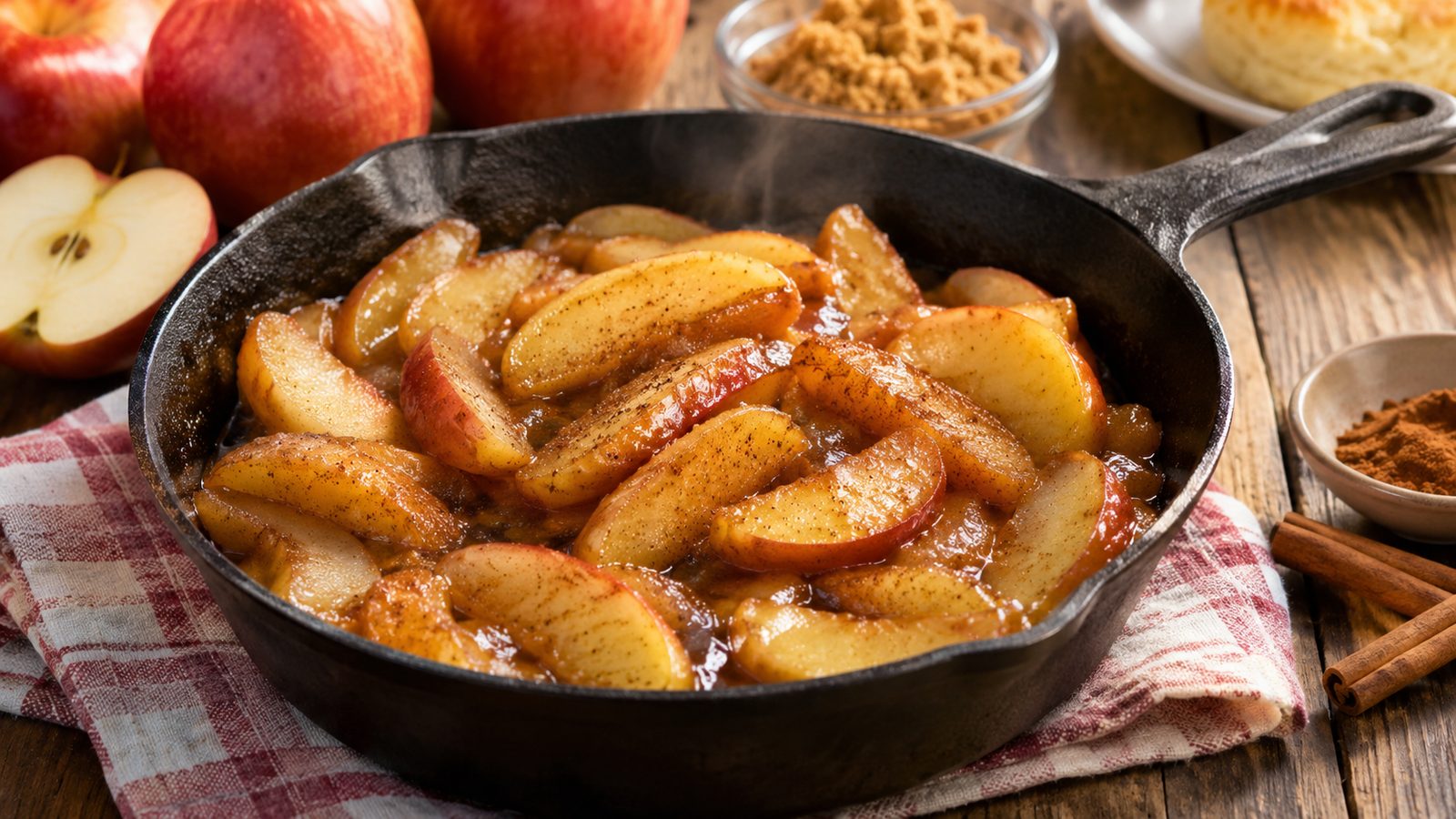
Fried apples are tender apple slices cooked in butter, brown sugar, cinnamon, and warm spices. This Southern-style skillet recipe takes about 25 minutes from start to finish. Serve it with breakfast, pork, biscuits, pancakes, or vanilla ice cream. Quick answer: Southern skillet apples cook best over medium heat in butter with brown sugar and cinnamon. Slice firm apples evenly, then cook until tender without turning them into applesauce. The finished dish should have soft slices coated in a glossy, buttery cinnamon sauce.
Quick Recipe Facts
| Detail | Information |
|---|---|
| Prep time | 10 minutes |
| Cook time | 15 minutes |
| Total time | 25 minutes |
| Servings | 6 |
| Cooking method | Stovetop skillet |
| Best apples | Granny Smith, Honeycrisp, Pink Lady, or Golden Delicious |
| Refrigerator storage | 3–5 days |
| Best served | Warm |
| U.S. measurements | Cups, tablespoons, teaspoons |
| Heat level | Medium to medium-low |
Why This Southern Skillet Recipe Works
Traditional Southern versions focus on a skillet, butter, sugar, and apples rather than deep frying. The fruit cooks gently while releasing enough juice to create its own sauce. Brown sugar gives that sauce a deeper caramel flavor than white sugar alone. The biggest challenge is getting tender slices that still hold their shape. Firm baking varieties make that easier because they soften more slowly. Even slices also finish cooking at roughly the same time. This version adds a small amount of cornstarch for a glossy sauce. You can leave it out if you prefer a thinner, more old-fashioned pan sauce. Readers looking for more homestyle ideas can also browse the Newsstact Food section.
Ingredients
You only need common grocery-store ingredients for this recipe. Measure everything before heating the skillet because the cooking moves quickly. Keep the sliced fruit close to the stove once the butter melts.
- 6 medium firm apples
- 4 tablespoons unsalted butter
- 1/2 cup packed light brown sugar
- 1 teaspoon ground cinnamon
- 1/8 teaspoon ground nutmeg
- 1/8 teaspoon salt
- 1 teaspoon cornstarch
- 2 tablespoons water
- 1 teaspoon vanilla extract
- 1 teaspoon lemon juice, optional
A 12-inch skillet gives the slices enough room to cook evenly. Cast iron works well, but a heavy nonstick skillet is also suitable. Use a wooden spoon or silicone spatula for gentle stirring.
Which Apples Are Best?
Granny Smith is a dependable choice because its tart flavor balances the sweet sauce. Its firm texture also stands up well to skillet cooking. Honeycrisp and Pink Lady provide a sweeter result while maintaining useful structure. Golden Delicious creates softer slices with a naturally mellow sweetness. Avoid fruit that already feels soft or mealy before cooking. Those varieties can break apart before the sauce has properly thickened. You can also combine two varieties for more flavor contrast. Try half Granny Smith and half Honeycrisp for tartness and sweetness. This simple blend produces a more balanced skillet than using an especially sweet variety alone.
How to Make Fried Apples in a Skillet
The goal is gentle sautéing rather than aggressive frying. Medium heat melts the sugar and butter without scorching them. Reducing the heat later gives the fruit enough time to soften.
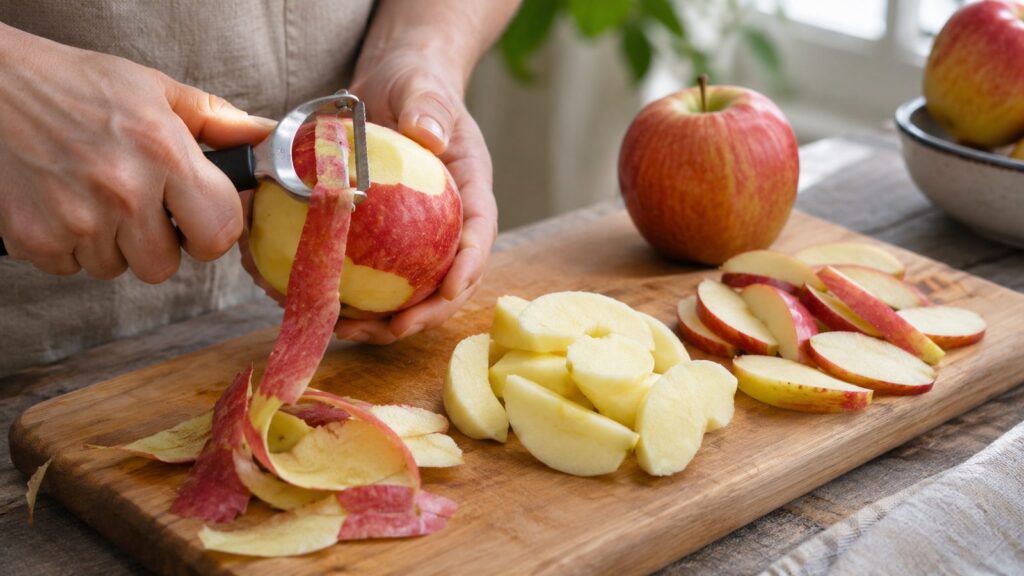
- Prepare the fruit. Peel the apples if desired, then remove the cores. Cut them into slices about 1/4-inch thick.
- Mix the seasoning. Combine brown sugar, cinnamon, nutmeg, salt, and cornstarch in a small bowl. Breaking up brown-sugar lumps now makes the sauce smoother.
- Melt the butter. Place a 12-inch skillet over medium heat. Add the butter and let it melt without browning.
- Add the slices. Place the prepared fruit in the skillet and stir gently. Cook for about five minutes until the edges begin softening.
- Add the sugar mixture. Sprinkle the seasoned brown sugar evenly over the skillet. Add two tablespoons of water and stir carefully.
- Finish cooking. Reduce the heat to medium-low and cook for another 7–10 minutes. Stir occasionally until the slices are tender but still intact.
- Add vanilla. Remove the skillet from the heat and stir in the vanilla. Let everything stand for two minutes before serving.
Watch the texture closely during the final minutes. Thin pieces can move from tender to mushy faster than expected. Remove the skillet from heat while the slices still have a little structure.
How to Get a Thick, Glossy Cinnamon Sauce
The sauce develops as butter, brown sugar, apple juices, and cornstarch heat together. A teaspoon of cornstarch gives the liquid body without making it gummy. Water helps the sugar dissolve before natural fruit juices enter the pan. Keep the heat moderate once the sugar goes into the skillet. High heat can reduce the sauce too quickly and scorch the sugar. A gentle simmer produces a smoother coating and gives the fruit time to soften. If the sauce becomes too thick, stir in one tablespoon of water. Add another tablespoon only if needed. If it remains thin, simmer uncovered for another minute or two.
Should You Peel the Apples?
Peeling is optional, so choose based on the texture you prefer. Peeled slices become softer and absorb more of the buttery cinnamon sauce. Unpeeled slices hold their shape better and add color. Many Southern home cooks use either method depending on what they have available. The recipe works without changing the cooking temperature. Keep your slices evenly sized whichever method you choose. Leaving the skin on also reduces preparation time. Wash and dry the fruit well before slicing it. Remove any bruised or damaged areas before the pieces enter the skillet.
Easy Flavor Variations
The basic recipe leaves room for small changes without complicating the process. Change one or two ingredients rather than loading the pan with competing flavors. Cinnamon should remain the main spice.
- Replace half the brown sugar with granulated sugar for a lighter sauce.
- Add 1/8 teaspoon ground ginger for extra warmth.
- Use apple pie spice instead of separate cinnamon and nutmeg.
- Add chopped pecans after cooking for extra crunch.
- Stir in one tablespoon of maple syrup for a richer fall flavor.
- Use salted butter and omit the added salt.
If you enjoy comfort-food combinations, these russet potato recipe ideas offer savory options for another meal. A sweet skillet side and hearty potato dishes both fit casual family menus. Keep each recipe separate so its texture remains distinct.
What to Serve With Them
These cinnamon-coated slices work as breakfast, a side dish, or dessert. For breakfast, spoon them over pancakes, waffles, oatmeal, or warm biscuits. They also pair well with eggs and sausage when you want sweet-and-savory contrast. For dinner, serve them alongside pork chops, ham, or roast chicken. Their sweetness works especially well with salty or smoky main dishes. Keep the serving size modest when using them as a side. For dessert, add vanilla ice cream or lightly sweetened whipped cream. Warm fruit against cold ice cream creates an appealing temperature contrast. You can also spoon the mixture over pound cake or cheesecake.
How to Store and Reheat Leftovers
Let leftovers cool before transferring them to an airtight container. Refrigerate them for 3–5 days. FoodSafety.gov recommends keeping refrigerators at 40°F or below and promptly chilling leftovers. That guidance is useful whenever you store cooked dishes at home. Discard food that developed unusual mold, odors, or other clear signs of spoilage. Reheat a serving in a small skillet over medium-low heat. Add a teaspoon of water if the refrigerated sauce has become thick. Microwave reheating also works, but shorter intervals help prevent overly soft fruit.
Can You Freeze Them?
Freezing is possible, although the texture will become softer after thawing. Cool the cooked mixture completely before packing it into a freezer-safe container. Leave a little space at the top for expansion. Thaw frozen portions overnight in the refrigerator before reheating. Warm them slowly in a skillet so you can control the final texture. Use thawed portions as a topping when the slices become softer than desired. Freezing makes the most sense when you have more leftovers than you can use promptly. Refrigeration gives better texture for short-term storage. Freeze portions early rather than waiting until the end of their refrigerated life.
Common Mistakes to Avoid
Using overly soft fruit is the most common texture problem. It can collapse into a chunky sauce before the sugar mixture has finished cooking. Start with firm fruit that feels crisp when sliced. Another mistake is turning the heat too high. Brown sugar can scorch while the center of each slice remains firm. Medium and medium-low heat give you much more control. Constant stirring can also break softened pieces. Stir gently and only often enough to prevent sticking. A wide skillet helps because fewer pieces pile on top of each other.
Frequently Asked Questions
How long do fried apples last in the refrigerator?
Store them in an airtight container in the refrigerator for about 3–5 days. Refrigerate the cooked fruit promptly after it has cooled enough for storage.
Are they the same as apple pie filling?
They are similar but not identical. Pie filling usually contains more thickener and must work inside a baked crust. Skillet versions are designed to be eaten immediately as a side, topping, or dessert.
Can I use white sugar instead of brown sugar?
Yes, granulated sugar will still create a sweet cinnamon coating. Brown sugar adds molasses notes and gives the sauce a darker color. You can also combine both sugars for a middle ground.
Why did my apple slices turn mushy?
The fruit may have been too soft, sliced too thinly, or cooked too long. High heat can also cause the outside to break down before you notice. Start checking the texture several minutes before the suggested cooking time ends.
Can I make this recipe without cornstarch?
Yes, simply omit it for a thinner sauce. The butter, sugar, and natural fruit juices will still create a flavorful coating. Simmer the mixture briefly if you want the liquid to reduce further.
A Simple Southern Side Worth Keeping
This skillet recipe turns basic ingredients into a warm dish in about 25 minutes. The key is firm fruit, moderate heat, and gentle stirring. Once you learn the texture, adjusting sweetness or spices becomes easy. Serve it beside breakfast, pair it with a savory dinner, or turn it into dessert. Save the method for fall apple season, holiday meals, or an easy weekend treat. You can find more food and everyday ideas in Newsstact’s Daily Bites. —
